A town built on coal
Bicknell owes its name to John Bicknell, a farmer born in Knox County who married Eliza Ann Chansler of a neighboring family and prospered on the land. In 1860 he bought 240 acres at $13.00 an acre and had part of it divided into lots. The ground had to be cleared of so many tree stumps that the first settlers simply called it Stumptown.
When George Fuller of Emison bought the first lot in 1868 and opened a store that doubled as his residence and the Post Office, the settlement briefly became Fullertown. A year later the community chose the name Bicknell in honor of its founder.
The first commercial coal shaft went down in 1873, and the town grew with the mines. By 1920 nearly 8,000 people lived here, more than 20 shaft mines employed 2,000 men, and daily trains carried miners to and from Vincennes. When many of the early mines closed in 1927, some citizens called it a death blow. It was closer to a change of direction. Bicknell today is a city of just under 4,000, a good place to raise a family and a good place to retire.
Timeline
- 1860
John Bicknell, a Knox County native and prominent farmer married to Eliza Ann Chansler, buys 240 acres at $13.00 an acre and has part of the land laid out in lots. Crews clearing the dense forest leave so many stumps that the settlement is nicknamed Stumptown.
- 1868
George Fuller of Emison buys the first lot and builds the town’s first store, which also serves as his home and the Post Office. For a time residents call the place Fullertown.
- 1869
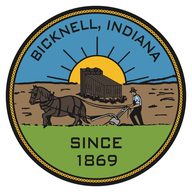
The community agrees to name the town Bicknell in honor of John Bicknell.
- 1873
The first commercial coal mine is sunk. More mines follow, and the coal industry begins drawing new residents.
- 1898
George Cleveland installs the first telephone in Bicknell.
- 1905
August L. Brocksmith builds the first electric plant, producing direct current. He also owns the first automobile in town.
- 1907
Bicknell is incorporated as a city with 4,005 citizens.
- 1913
Main Street is paved, six years after incorporation.
- 1918
The city waterworks is built.
- 1920
Nearly 8,000 people live in Bicknell. More than 20 shaft mines with rail connections employ 2,000 men, and daily trains carry commuting miners between Bicknell and Vincennes.
- 1927
Many of the early mines close. Several citizens call it a “death blow” to the town.
- Today
Bicknell is home to just under 4,000 people. The city that boomed as a mining town has become a small community well suited to raising a family and to retirement, and the welcome mat is still out.